Ask most parents what they want most for their children, and somewhere near the top you will hear: I want them to be good people. Kind, honest, respectful, generous. In Islam, this is called adab and akhlaq: good manners and good character.
The good news is that character is not something children either have or do not have. It is learned, mostly at home, mostly by example. Here is how to teach it.
- Good character is at the very heart of Islam.
- Children learn manners mostly by copying the adults around them.
- Focus on one small habit at a time, and praise it when you see it.
- Stories of the Prophet ﷺ and the companions bring good character to life.
Why good character matters so much
The Prophet ﷺ said: “The best of you are those with the best character.” (Sahih al-Bukhari 6035). He also said that he was sent to perfect good character (Al-Adab Al-Mufrad 273). Manners are not an extra; they are part of faith itself. A child who prays and also speaks kindly, tells the truth and respects others is living Islam fully.
1. Be the example
Children watch everything: how we speak to each other, how we treat the delivery driver, how we react when we are tired. If we want polite children, they need to see politeness at home. Say please and thank you to your children, apologise when you get it wrong, and greet them with a warm salam.
A note from Mohamed Eid, Quran & Islamic Studies Teacher at Bloomtivo
A child broke something at home and immediately said, “It wasn’t me.” The parent knew what had happened, but chose not to begin with a warning. Instead, they asked, “Are you worried about what I’ll say?”
The child nodded.
That answer changed the conversation. The parent thanked the child for telling the truth, then spoke about what needed to be done about the broken item. The mistake still mattered, but honesty was not punished along with it.
Children sometimes hide the truth because they are trying to escape the consequence. If every admission brings a bigger reaction, they learn to hide more carefully. A useful response is to separate the two things: “I’m glad you told me. Now let’s put this right.”
Teaching honesty does not mean ignoring mistakes. It means making truth the safest place to begin fixing them.
— Mohamed Eid, Quran & Islamic Studies teacher at Bloomtivo
2. Start with the salam
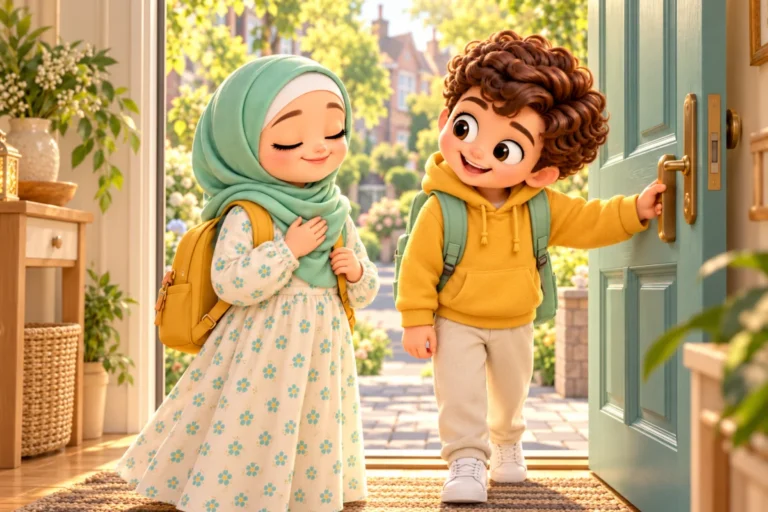
The Prophet ﷺ encouraged spreading the greeting of salam, and linked it to love between people (Sahih Muslim 54). Teach your child to say As-salamu alaykum when they come home, meet family and visit friends, and to reply Wa alaykum as-salam. It is a small habit that builds warmth every day.
3. Respect for parents and elders
Allah commands kindness to parents and gentle words, even saying not even “uff” to them (Surah Al-Isra 17:23). Help your child practise: standing to greet grandparents, listening without interrupting, helping without being asked.
4. Saying thank you
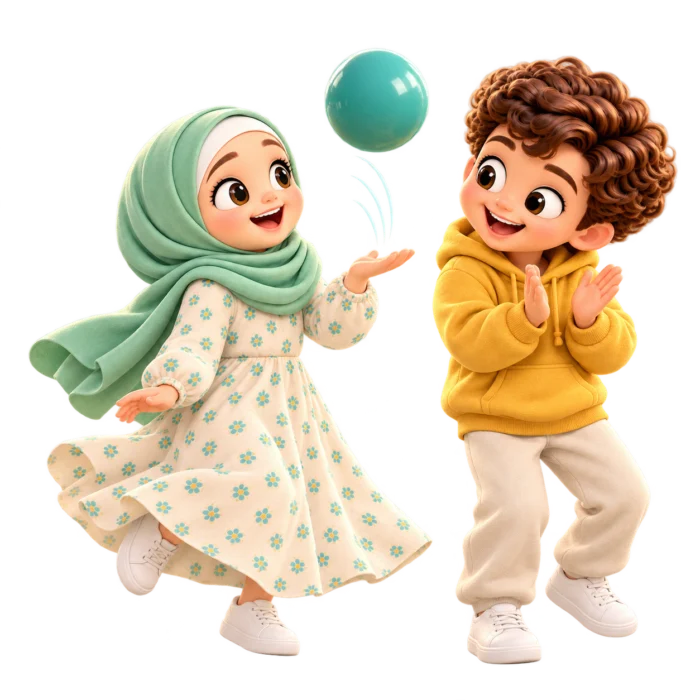
The Prophet ﷺ said: “Whoever does not thank people does not thank Allah.” (Sunan Abi Dawud 4811). Gratitude to people and gratitude to Allah go together. Encourage your child to thank teachers, friends, siblings and even the bus driver, and to say Alhamdulillah for their blessings.
5. Honesty, even when it is hard
Children sometimes lie out of fear. Make honesty safe: when your child tells the truth about a mistake, thank them for their honesty first, then deal with the mistake calmly. They will learn that telling the truth is always the right choice.
6. Everyday etiquette
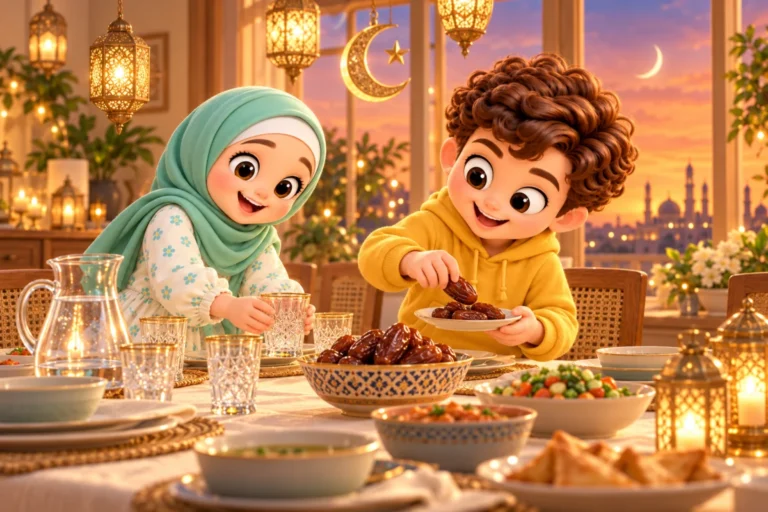
- Eating: say Bismillah, eat with the right hand and from what is in front of you, and say Alhamdulillah afterwards.
- Speaking: use kind words, a gentle voice and no name-calling.
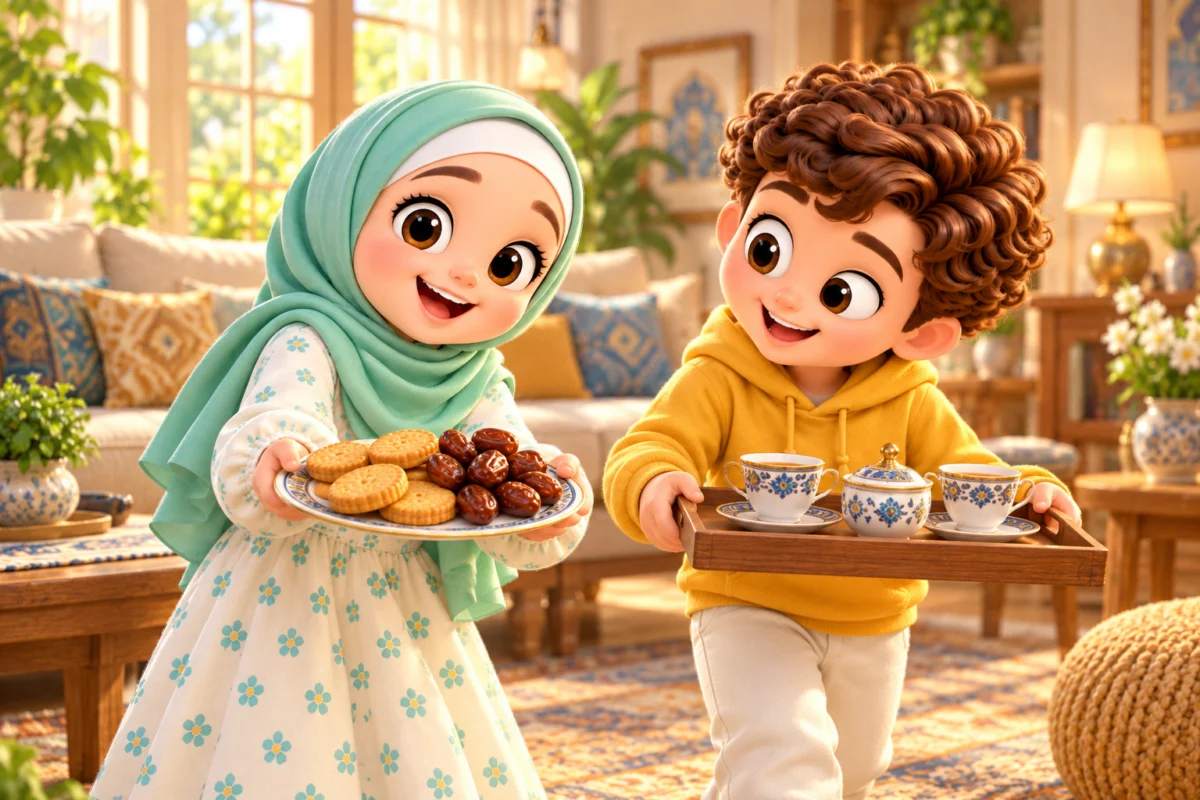
- Visiting: knock, greet, and ask before touching things.
- Sharing: take turns and offer to others first.
Our guide to daily duas for kids covers the duas that go with many of these moments.
7. Good manners online
Today, adab includes screens too. Talk with your child about being kind in messages and games, never mocking or excluding others, and telling you if something online makes them uncomfortable. The same character applies everywhere.
Teacher’s tip: choose one “manner of the week”, like greeting with salam or saying thank you. Practise it together, notice it, and celebrate it at the weekend. Small habits grow into strong character.
8. Tell the stories
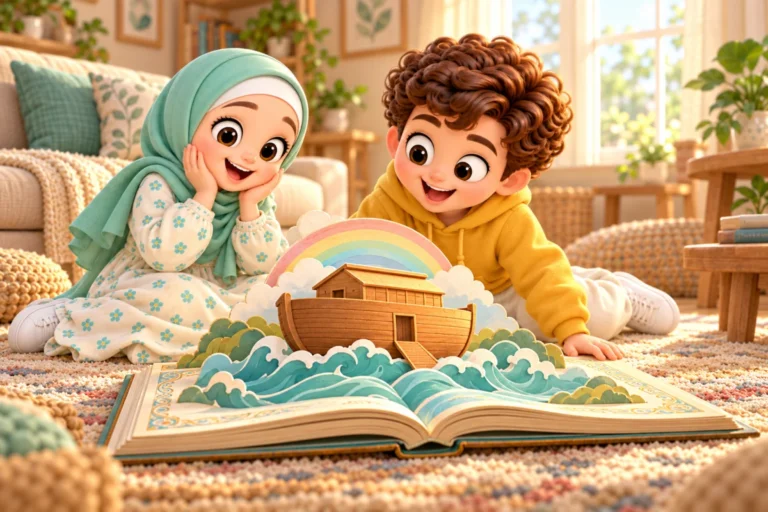
The life of the Prophet ﷺ is full of beautiful examples: his kindness to children, his patience, his honesty that earned him the name Al-Amin, the trustworthy. Stories stay in children’s hearts far longer than rules. Explore our Seerah and 40 Hadith for Kids programmes for more.
9. Correct gently
When your child forgets their manners, correct them privately and calmly, without shaming. Remind them of the good habit, and give them a chance to try again. Gentle correction teaches; harsh correction only teaches fear.
One manner a week
Trying to teach everything at once rarely works. Choose one manner each week, model it yourself, and notice it out loud when your child gets it right.
| Week | Manner | Practise it when |
|---|---|---|
| 1 | Saying salaam | Coming home and meeting family |
| 2 | Bismillah and the right hand | Every meal |
| 3 | Saying JazakAllahu khairan | Someone helps or gives a gift |
| 4 | Speaking gently to parents | Being asked to do something |
| 5 | Telling the truth | Something goes wrong |
| 6 | Sharing and tidying up | Playtime with siblings or friends |
Our free Good Manners Chart turns this into a star chart for the fridge.
Learning good character with a teacher
Our Islamic Manners (Adab) programme teaches good character through stories, real-life situations and small weekly challenges, in live 1-to-1 lessons. It pairs beautifully with Islamic Studies. You can start with 2 free trial lessons.
Sources and further reading: Sahih al-Bukhari 6035 · Al-Adab Al-Mufrad 273 · Sahih Muslim 54 · Sunan Abi Dawud 4811 · Surah Al-Isra 17:23 (Quran.com)